
Dehydrated and Freeze Dried Food
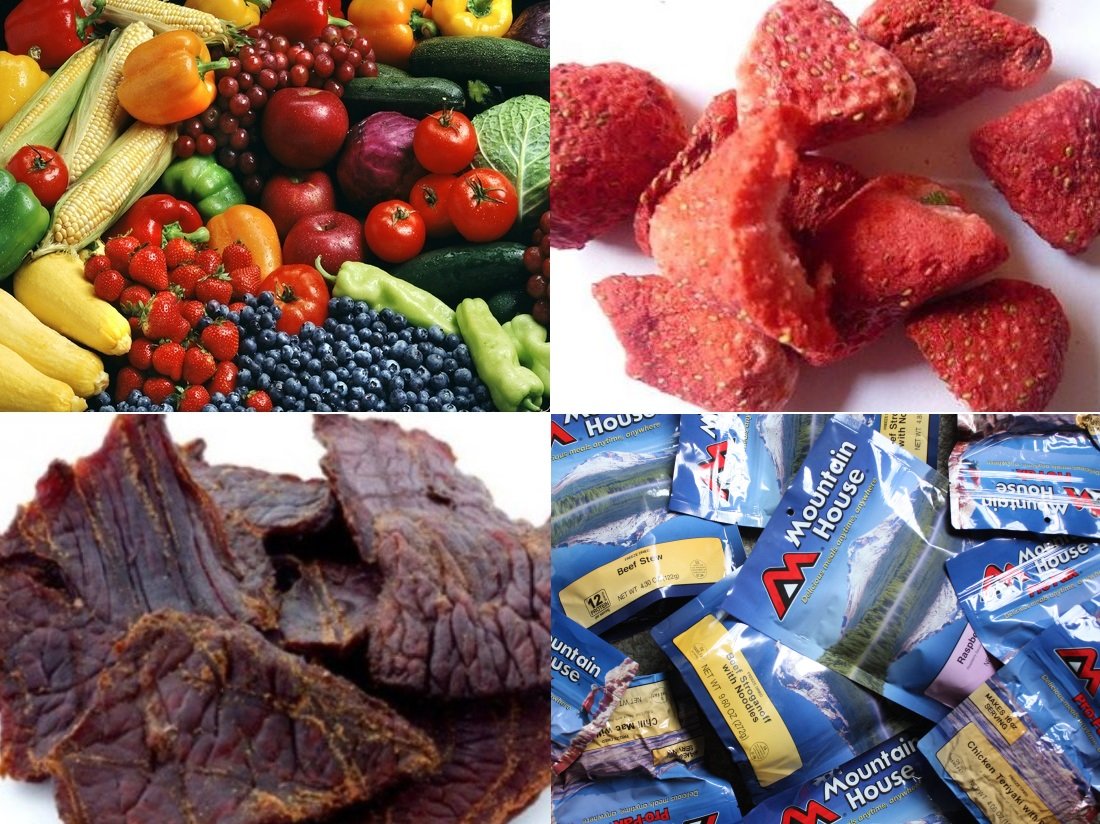 Most food intended for long term food storage is either dehydrated or freeze dried. Though many people use the terms interchangeably, they are not the same and describe two very different processes. There is also a significant difference in the way they are used.
So what is the difference between Dehydrated and Freeze Dried food?
Dehydrated Foods
Dehydration is the process of removing the moisture content. Actually, it is not possible to remove 100% of the moisture from foods. Most commercially available dehydrated food has 10 to 20 percent of the original moisture content remaining. The moisture is removed slowly, as the uncooked food is heated to low temperatures between 115°F and 155°F. Warm air is circulated around the drying food so that the heat is evenly distributed and it is dehydrated uniformly. This will usually take from 6 to 12 hours to complete.
Freeze Dried Foods
Freeze drying is a more extensive process that removes 98 to 99 percent of the moisture. Food ss fully cooked and, if needed, processed. It is then “flash frozen” and placed in a vacuum, which causes the frozen moisture to change to a gaseous state without first becoming a liquid. This process can take 24 to 36 hours to complete.
You can dehydrate foods at home pretty easily with an inexpensive dehydrator, or you can use your oven or even sunlight. Home dehydrated food will usually have higher moisture content than commercial products. Freeze drying at home requires special equipment and can be pretty expensive.
Shelf Life
A primary concern with long-term storage is how long you can keep it. It might surprise you to know that the “best by” or “use by” dates on food packaging are not regulated by any government agency. Those are established by the food industry. Commercially packaged dehydrated foods can have a shelf life of 10 to 20 years if stored properly. Freeze dried food, on the other hand, can be stored 20 to 30 years or longer.
Store dehydrated and freeze dried food in a cool temperature and away from sunlight. Ideally you will keep it 55 to 60 degrees or lower. Also, it must be kept dry. Remember, the reason you can store it for extended periods is because moisture was removed, and when you add water it will be because you are ready to use it. Moisture is the enemy of long-term food storage.
Rehydrating
As both dehydrated and freeze dried foods were prepared by removing moisture, you will add moisture back in to use them. While in both cases you will “just add water,” how you do that is different. As stated earlier, freeze dried foods are cooked and processed before they are freeze dried. Rehydrating can be done with hot or cold water, and within a few minutes the freeze dried food will look just as if it had been conventionally frozen and then thawed.
Dehydrated food takes a little more effort to rehydrate. You must use hot, preferably boiling, water. Since dehydrated food is not pre-cooked, it will take longer to prepare. This also means you will fuel or a heating source, something that might not be readily available in an emergency. Dehydrated foods usually will not return to their original appearance or taste. Think about using hot water to rehydrate a raisin – it will not once again become a grape.
In both cases, water is a necessity to rehydrate the food. You should consider this when determining your water needs in an emergency situation.
Physical Characterstics
Dehydrated food will shrink and shrivel as it dries and the moisture is removed. Consider a raisin, a dried grape. It becomes smaller and more dense after dehydration. Because it still has a small amount of moisture in it, dehydrated food will be tough and chewy. Consider jerky, which is dried and dehydrated meat. Even rehydrated, these foods will still be somewhat chewy.
Freeze dried foods generally retain their original size. With the moisture almost completely removed, they are very lightweight and airy. Freeze dried food is brittle, and sometimes can even turn to powder if handled. It often has a very light color until reconstituted.
When stored the dense, compacted dehydrated food takes up less space per serving than does the freeze dried food. A #10 can of dehydrated vegetables will be much heavier than a can of freeze dried vegetables, and may have 5 or 6 times as many servings. When considering what you will be able to store you may need to determine the proper balance between the dense, heavier cans that take up less space and the lighter packaging that may be easier for you to handle and move.
Nutrition
If properly stored in cool, dry conditions, both dehydrated and freeze-dried products will retain much of their nutritional value as they were packaged at least through the recommended shelf life. However, it is important to understand that the drying process prior to the packaging may have affected the nutritional value of the original, fresh fruits and vegetables. In particular, the slow heating and drying process of dehydrating causes some of the nutritional value to be lost.
Dehydrated products are likely to lose vitamin A, B1 (thiamine), B2 (riboflavin), B3 (niacin) and C through the dehydration process and over time. Most all of the nutritional value of freeze dried products will be retained with the exception of Vitamin C. Because nutritional supplements such as a multi-vitamin are an important part of emergency planning, you will want to consider these when you make your plan.
Both dehydrated and freeze dried foods will still be edible well beyond the stated shelf life, however nutritional value and taste will likely be diminished. Of course, if a can is bulged, rusted or has a broken seal it should be discarded.
A good long-term food storage plan will probably include a mix of dehydrated and freeze dried foods as well as air-tight sealed containers of products like dried beans, wheat and/or rice that are in their natural state.
Comments
Dehydrated and Freeze Dried Food — No Comments
HTML tags allowed in your comment: <a href="" title=""> <abbr title=""> <acronym title=""> <b> <blockquote cite=""> <cite> <code> <del datetime=""> <em> <i> <q cite=""> <s> <strike> <strong>