
10 Emergency Items for your Car
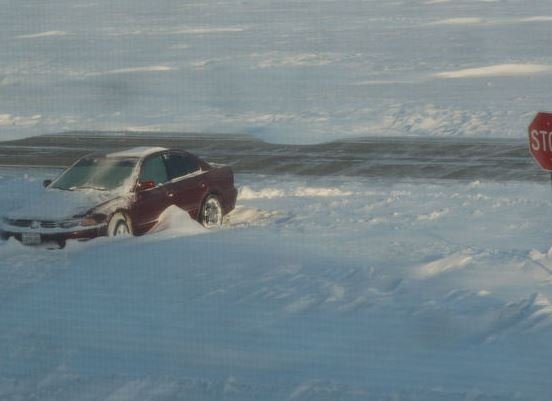 You never know when an emergency situation might occur while you are out in your car. It doesn’t have to be wintery weather. A mechanical breakdown or single-car accident off the main highway could leave you in peril until help arrives. Are you prepared?
Here are ten essential emergency items you should carry in your vehicle. These are in addition to things you should normally have anyway – like jumper cables, a jack and tire tool and an ice scraper. This is not an exhaustive list, but it is a start. Consider making adjustments as your personal needs may dictate.
- Water – Keep at least two 500ml bottles per person,based on who normally rides in your vehicle. You may want to carry these in a waterproof collapsible cooler in case they sweat or freeze. Don’t drink these just because you are thirsty, but make sure you do use and replace them every few months. If you live where there is a cold winter climate, remember that these may freeze.
- Protein or Snack Bars – Have a box of granola bars, protein bars or some similar energizing snack. These should be something that you and your passengers enjoy, but don’t just casually eat them when you get hungry in the car. Like the water, reserve these items until you need them. Be careful of snacks that might melt in hot weather. Check expiration dates, and replace them when they get old. It might be helpful to write the expiration dates for your snacks and your water on a card in your emergency pack
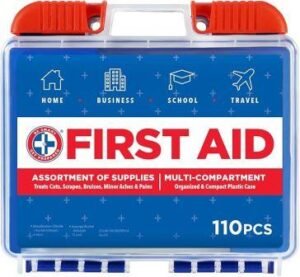 First Aid – You will want a small, basic first aid kit that includes bandages, alcohol wipes and triple antibiotic cream. Click on this image for a small, inexpensive first aid kit suitable for your car. Add other items such as a bee sting kit or a dose or two of essential medications if needed. Remember to replace items you may use, and check the dates on any medications. If you typically travel with a small child, consider a couple of disposable diapers and small package of baby wipes. Have a guide handy so you know what to do when first aid is needed (there is a printed guide in this kit). Sometimes in a panic situation we might not remember or think as clearly.
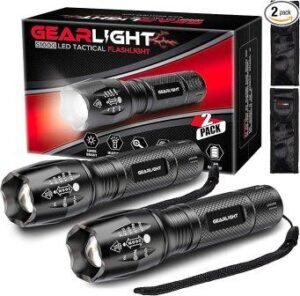 Flashlight – Get a good water-resistant flashlight, not one of those cheap promotional items that barely puts out light. Click on this image for a 2-pack of very bright flashlights – actually three levels of brightness and a zoom feature to focus the beam. These also have a strobe mode or can automatically flash SOS in Morse code. Check the batteries occasionally and either keep a spare set or a second good quality flashlight on hand. The lights in this 2-pack can either use three AAA batteries or one 18650 rechargeable battery and . Store the extra batteries in a zip-top baggie.
- Blanket – A good wool-blend blanket will be both soft and warm. Even if you live in a warm climate, you should keep a blanket on hand for colder evenings or to act as a cushion if needed. It is important to keep the wool blanket dry. You may also want to keep a few Mylar emergency blankets handy as well. They are small and easy to store, and will help to retain body heat.
- Work Gloves – Protection for your hands is essential if you need to get out and move something like limbs, trash or other debris. Get a couple of pairs of good canvas and/or leather (not jersey) gloves. If you buy gloves that have a plastic piece tying them together, remove it now rather than having to do it during an emergency. Store them in a zip-top baggie to keep them together.
- Electrical Tape – A small roll of electrical tape will not take up much space and can be invaluable in making small repairs.
- Multi-tool – A Leatherman or similar multi-tool is convenient to store and can be carried with you if you need to go outside your vehicle for any reason. At a minimum, the tool will include pliers, screwdrivers and a knife blade. Something like a Swiss Army knife is also good but make sure you have pliers that can cut wire along with it.
- Road Flares – Keep them dry and be sure you know how to use them.
- Cash – Keep a small amount of cash stashed in your vehicle, including quarters. In the event of a power outage, you may not be able to use your credit/debit card.
Here are just a few other recommendations
Check your spare tire; make sure it is inflated and that you know how to change it. If possible, keep your gas tank full and top it off when you stop at a gas station rather than just putting in enough fuel to get by. You never know when gasoline won’t be readily available (remember, in a major power outage the pumps in your area may not work). If you live where there is snow during the winter months, keep a small spade and a container of kitty litter in your trunk so you can clear the area around your tires and get some traction.
Your cell phone may provide a way for someone to locate you if there is coverage. If you use your cell phone, remember that a text message can sometimes get through where coverage for a voice call is questionable. A citizens band radio or handheld FRS (Family Radio Service) radio can also provide communication in an emergency. Get one that also receives NOAA weather broadcasts. Again, make sure they stay charged or that you have extra batteries.
Finally, if you are travelling more than an hour from home, put your go-bag in your vehicle. If you haven’t prepared one yet, click here to read what should be in it. It will do you no good sitting near your front door ready for you to grab if you aren’t home to grab it. The timing of an emergency situation is never anticipated, so always be prepared.
Comments
10 Emergency Items for your Car — No Comments
HTML tags allowed in your comment: <a href="" title=""> <abbr title=""> <acronym title=""> <b> <blockquote cite=""> <cite> <code> <del datetime=""> <em> <i> <q cite=""> <s> <strike> <strong>