
Communication in a Disaster
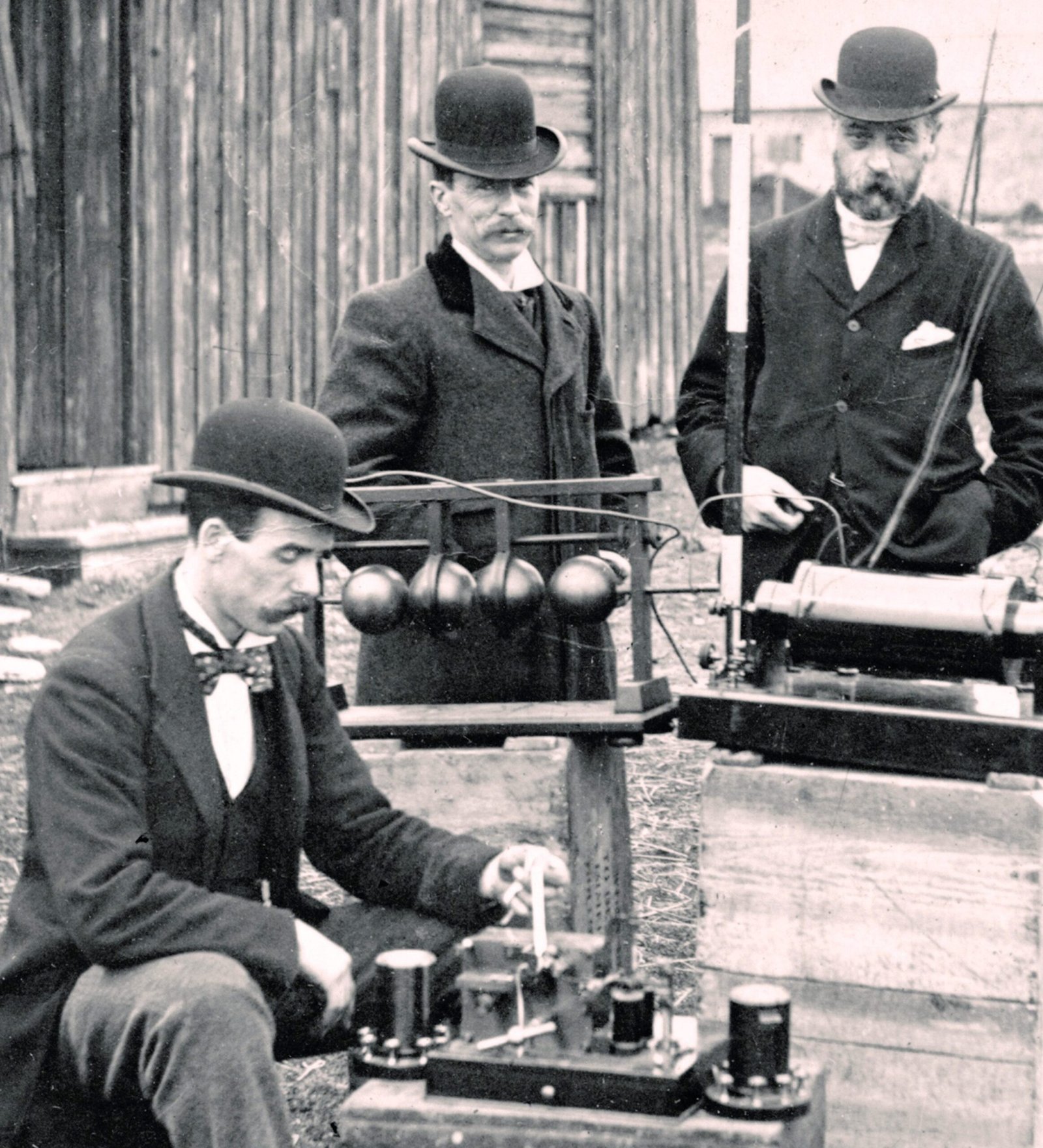 Among your emergency supplies for a disaster or other emergency situation you will need two kinds of reliable communication. You will need to stay informed about what is going on around you, and you will need to connect to family members, friends, or another support system. Do not rely on your cell phone, as cellular service will likely be disrupted. In addition, cell phones are easily traceable in the event you are concerned about staying under the radar.
Keeping up with the news can be as simple as a portable AM/FM radio, assuming that broadcast stations remain on the air. The Emergency Alert System, which replaced the Emergency Broadcast System in 1997, is a joint effort of the Federal Emergency Management Agency (FEMA), the Federal Communications Commission (FCC) and the National Weather Service (NWS). Local radio broadcast stations, as well as broadcast television, satellite and cable services and cellular telephone companies, are a part of this system. It is designed first for the President of the United States and secondly for other services to alert the public about emergency situations through broadcast media and other outlets.
Before relying on a radio for updates, you should take the time to make sure you know where to find broadcast stations in your area. Strange as that may sound, many of us are used to just punching a button on a radio and hearing the station – if we ever bother to even change the channel at all. Know the frequency of reliable broadcast stations, both AM and FM, that you can tune to in an emergency. AM radio stations, though less commonly used today, may provide the best reception over the farthest distances. Some are more powerful stations with “clear channel” broadcasts; for example at my location, WLW in Cincinnati at 700KHz has daytime coverage over much of Indiana, Kentucky and Ohio with night reception in most of the Eastern United States. Knowing where to tune will be important in an emergency.
Your radio should have alternate power sources, including the ability to charge internal batteries by solar power or a hand crank (“dynamo”). It should also be capable of receiving weather broadcasts on the seven NWS channels. I have a crank operated American Red Cross FRX2 radio with a flashlight and cell phone charger that is small and convenient for my go bag. There are a number of other options, including some with solar charging capabilities and short wave broadcast reception. You should have a suitable earpiece so that you can listen privately if needed.
Staying connected with family or friends requires two-way communication. There are several walkie-talkie type radios available using the Family Radio Service (FRS). FRS radios are unlicensed low-powered handheld UHF units, usually sold in pairs, and having limited range. Manufacturers will claim communication over several miles in optimal conditions; however, a quarter-mile is more realistic with a mile or more possible if there are no obstructions.
Similar to FRS is the General Mobile Radio Service (GMRS), which shares some of the channels with FRS. GMRS radios are also UHF handheld units with a somewhat higher power output resulting in a longer range. GMRS radios require a license. Hybrid FRS/GMRS radios are sold that automatically limit power on the FRS channels, making a total of 22 channels possible (you still need a license to use the 8 GMRS-only channels).
The best option for communication is for you to obtain your Amateur Radio (ham radio) license. More information on this licensing is available from the American Radio Relay League or an amateur radio club in your local area. Amateur Radio operators use a broad spectrum of radio frequencies enabling communication around the world, with privileges dependent on the class of license obtained. Local emergency communication usually takes place on VHF or UHF frequencies, often using a portable walkie-talkie type radio. These are typically higher power than FRS/GMRS radios and thus have a much greater range. Repeaters are often used to increase coverage and to bring operators together on a common frequency channel.
These radios range in price up to several hundred dollars, although recently a manufacturer in China, Baofeng, has introduced a very low priced line of VHF/UHF radios. They are less intuitive than FRS/GMRS walkie-talkies, but if you are up to it they can’t be beat for the price. Remember, you MUST have an amateur radio license to transmit with these radios. The FCC has levied substantial fines on people transmitting on amateur radio frequencies without a license. Besides covering the VHF and UHF amateur radio bands, the popular Baofeng UV-5R will receive standard commercial FM broadcasts, VHF public service broadcasts, NOAA/NWS weather broadcasts and all of the FRS/GMRS channels. By itself, these battery powered radios do not have an alternate power source.
Good emergency preparedness means having the right communications equipment and knowing how to use it.
Where can I go to get one of these low-cost amateur radios? I guess the investment would also include making sure that your extended or immediate family members also have them and know how to use them. So the cost could be ten times what it is for you, especially if you gift everything to everyone else. What about having emergency plans for meeting places and things? I think if everyone is on the same page that will help with communication worries too.
Hi Sarah, there is a link at the bottom of the post for the Baofeng UV-R5 at Amazon, probably the lowest price you will find. Right now it is only $33.99.
Yes, a planned place to meet that everyone knows about is essential and works in tandem with staying informed and communicating when you are apart.