
Updating Your Checklist
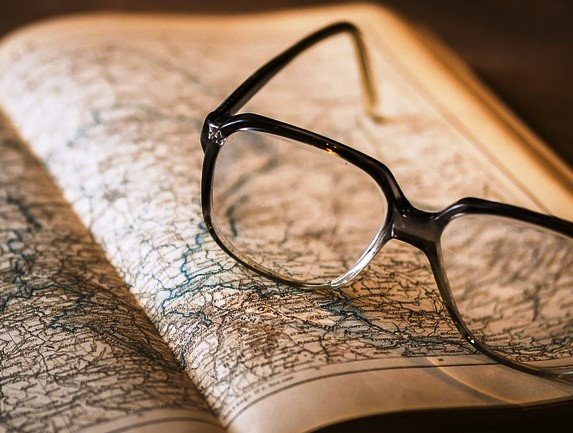 In addition to the standard items in your 72-hour kit, your own personal situation may require you to consider additional items. Here are a few important items you might want to add to your emergency preparation checklist, whether you have to shelter in place or make a run for it.
Eyeglasses
If you wear eyeglasses, chances are you have an old pair. The prescription might not be exactly the same as what you have now, but it is probably more than sufficient for you to be able to see in an emergency. Keep a pair of your most recent old eyeglasses in your emergency kit. Any older pairs you have that you can still see through comfortably could be useful in an emergency.
And if you wear contact lenses, you should have a couple of pairs of disposable lenses in your emergency kit. Remember to check expiration dates and rotate them out just as you would other items. However, if you use both glasses and contact lenses, your best bet will probably be the extra pair of glasses.
Finally, know if you could get by with another solution should your glasses not be available. Can you use off-the-shelf reading glasses? Should you add a small magnifying glass to your emergency kit? What can you do without glasses?
If you can read larger print without your glasses, consider modifying your emergency kit so that you don’t require your glasses to be able to identify and use things. Without glasses, can you tell which way to put batteries in your radio or light? If not, make some kind of mark indicating the proper position. Use masking tape and a Sharpie to mark essential medications and first aid items. When you think you have everything covered, go through your emergency kit without wearing your glasses and see how it goes.
Your Bicycle

Keep your bicycle in good condition so that you can call on it when you need it. Keep a manual tire pump attached to the frame, and carry a spare inner tube. You should know how to patch or change the inner tube should you need to do so.
To enhance your preparedness, be sure you have a basket, rack or bag available to quickly attach to your bicycle. If you have young children, you may want to consider a trailer where they can ride. Be absolutely certain you know how to attach and safely use any kind of accessory. In an emergency situation, you cannot afford to add additional complications caused by neglect or carelessness.
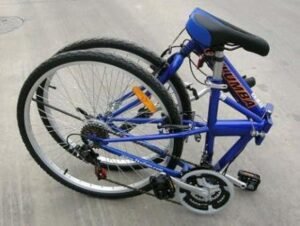
You may be out a good way from home when your car experiences a breakdown or simply stops running because of an EMP or sudden lack of availability of fuel. These are extreme scenarios, but when they happen it is too late to begin preparing. If possible, you should consider keeping a bicycle in your vehicle. There are many models that fold down to small sizes and can be conveniently stored. Click on this picture to see this 26-inch bicycle with folding handlebars at Amazon. This one fits very nicely in a sturdy cloth storage bag in your trunk, behind the seats in your truck or in the lower storage area of your van.
Printed Maps
Many years ago most service stations had an assortment of road maps offered free to their customers. I still have a couple of Eastern United States maps by Shell and Marathon from the mid 1970’s. Today we rely on web services like Google or MapQuest to plan, and then on our GPS devices or cell phones as we travel.
In an emergency, you will need to have printed paper maps to navigate as electronic services may be unavailable or become unreliable. Printed roadmaps can be accessed quickly, shared easily with another person to assist with navigation, and can usually show a larger area without the need for scrolling, flipping pages or re-entering data. A printed road atlas offers the convenience of many maps together in one place. Make sure you have adequate maps of your local area, your state, and alternate locations (such as your bug-out location or a relative or friend’s area) that you may need.
Yes, using modern technology makes it easy to keep things up-to-date and to locate routes and information specific to the travel need you have at the moment. However, the use of technology also increases your dependence on someone or something else – in this case, the person or service providing the on-demand information to you. On a normal day, this is not a problem and is, in fact, very desirable. Preparation is not for a normal day; it is for the unusual, uncertain day. At that time, being able to use a service is an asset, but having to rely on a service or the performance of someone or something else is a liability.
Again, in a worse-case scenario, it may not be advisable to use your cell phone. While a GPS device may only receive signals, your cell phone is constantly transmitting. If you want to be tracked and located, this is fine. But if you do not want a tracking signal to be sent from your location, then you cannot use your cell phone even for GPS. Turning your phone off is not good enough. You must remove the battery (if you cannot do that, consider a different phone).
Other Things You May Need
Consider your own personal situation and determine whether or not there are other things you should obtain in preparation for an emergency. Do you need to be able to transport pets and keep them safe? Along with eyeglasses, do you need a backup device to assist your hearing? Do you need special accommodations to walk? To sleep?
Make a personal assessment and prepare where it is appropriate for you in your situation. While you are at it, pull out your 72-hour emergency kit and check the items that are in it – the condition of the batteries, the dates on food items, etc. Update them as needed. Preparation, by definition, must always be done in advance of the emergency. Be ready.
Comments
Updating Your Checklist — No Comments
HTML tags allowed in your comment: <a href="" title=""> <abbr title=""> <acronym title=""> <b> <blockquote cite=""> <cite> <code> <del datetime=""> <em> <i> <q cite=""> <s> <strike> <strong>