
Your Emergency Kit
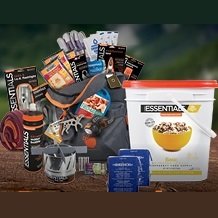 The Federal Emergency Management Agency (FEMA) has encouraged all Americans to make simple preparations to respond to potential emergency situations, such as natural disasters or terrorist attacks. Through the Ready Campaign, FEMA outlines three important steps:
- Have an Emergency Kit.
- Have a Family Emergency Plan.
- Know the appropriate response for different types of emergencies.
When you prepare your emergency kit, you should have basic supplies on hand in order to survive for at least three days. These are often referred to as 72-Hour Emergency Kits. FEMA has provided a checklist of some basic items everyone should have on hand. Of course, everyone will have unique needs depending on location, family size and ages, medical requirements and other things. The basic checklist is a starting point and should be modified as appropriate. You should also prepare smaller kits suitable for your vehicle, workplace, school or wherever else you may spend significant time.
- Water, one gallon of water per person per day for at least three days, for drinking and sanitation.
- Food, at least a three-day supply of non-perishable food.
- Battery-powered or hand crank radio and NOAA Weather Radio with tone alerts and extra batteries for both.
- Flashlight and extra batteries.
- First aid kit.
- Whistle to signal for help.
- Dust mask, to help filter contaminated air and plastic sheeting and duct tape to shelter-in-place.
- Moist towelettes, garbage bags and plastic ties for personal sanitation.
- Wrench or pliers to turn off utilities.
- Can opener for food (if kit contains canned food).
- Local maps.
In addition to the above items, consider whether or not you need these:
- Prescription medications and glasses,
- Infant formula and diapers.
- Pet food and extra water for your pet.
- Important family documents such as copies of insurance policies, identification and bank account records in a water proof, portable container.
- Cash or traveler’s checks and change
- Emergency reference material such as a first aid book or information from www.ready.gov.
- Sleeping bag or warm blanket for each person. Consider additional bedding if you live in a cold-weather climate.
- Complete change of clothing including a long sleeved shirt, long pants and sturdy shoes. Consider additional clothing if you live in a cold-weather climate.
- Household chlorine bleach and medicine dropper. When diluted nine parts water and one part bleach, bleach can be used as a disinfectant. Or in an emergency, you can use it to treat water by using 16 drops of regular household liquid bleach per gallon of water. Do not use scented, color safe or bleaches with added cleaners.
- Fire extinguisher.
- Matches in a water proof container.
- Feminine supplies and personal hygiene items.
- Mess kits, paper cups, plates and plastic utensils, paper towels
- Paper and pencil.
- Books, games, puzzles or other activities for children.
Comments
Your Emergency Kit — No Comments
HTML tags allowed in your comment: <a href="" title=""> <abbr title=""> <acronym title=""> <b> <blockquote cite=""> <cite> <code> <del datetime=""> <em> <i> <q cite=""> <s> <strike> <strong>